Direct connection
Connect the two wires from the battery holder directly to the electric contacts on the back of the motor.


CARBOAT
This kit combines a simple electric circuit with a motor-driven propeller boat. It can also be adapted into a land vehicle, making it a useful science and engineering project for classroom demonstrations and student experiments.
Please verify and compare the contents of your kit with the list below. This kit was updated as of March 1st, 2008.

The new content includes:
If anything is missing, call (973) 777-3113 immediately and email info@MiniScience.com.
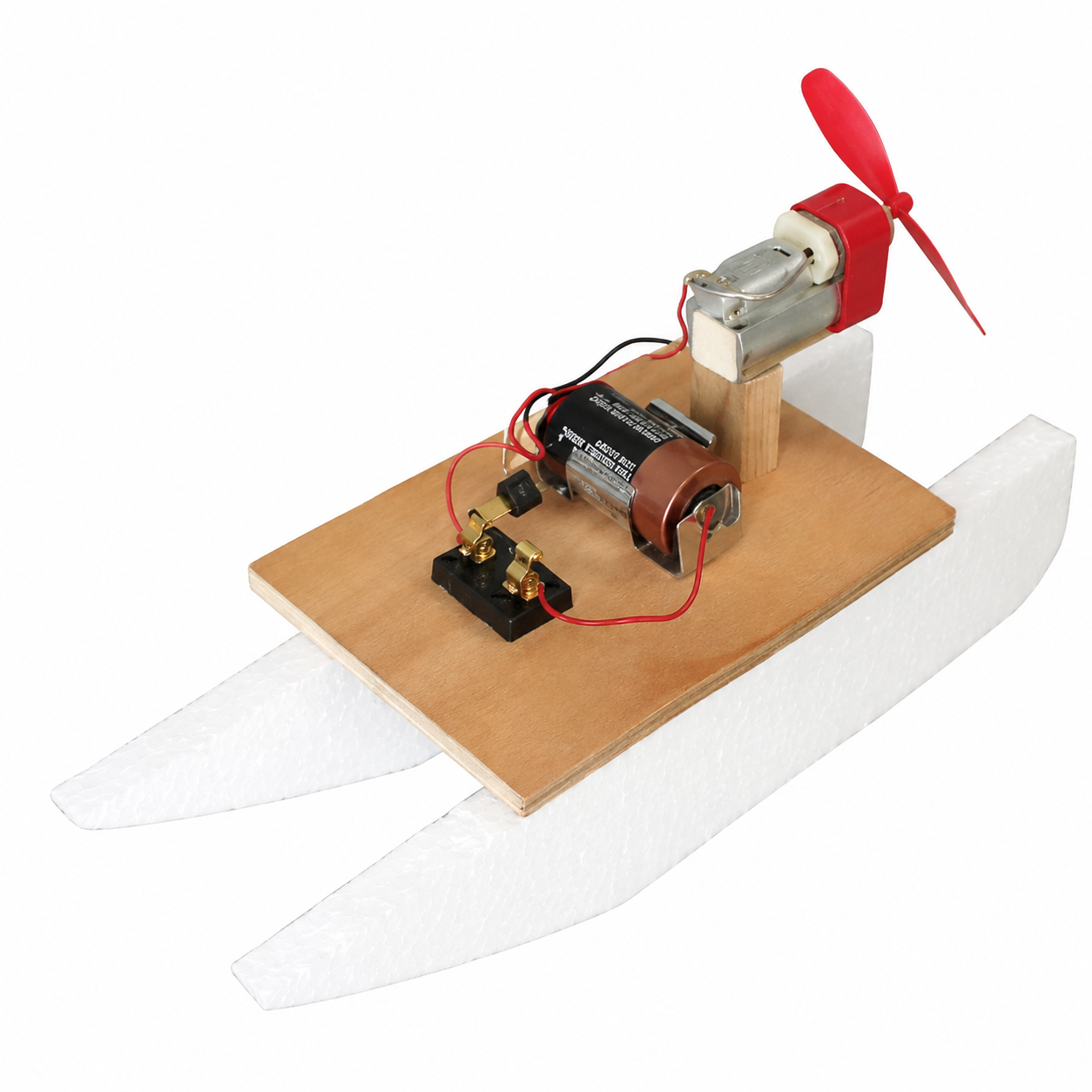
The battery and electric motor in this project form a simple electric circuit. Connections are possible in several different ways, from the most direct wiring to more advanced layouts with a switch and multiple battery holders.
Connect the two wires from the battery holder directly to the electric contacts on the back of the motor.
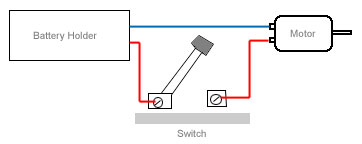
Use one battery holder, one switch, and one motor. One wire goes directly to the motor, and the other passes through the switch first.
A more complex version can use two battery holders with the switch installed between them.
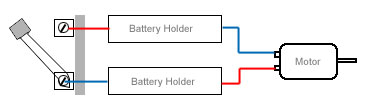
Note: the motor can spin in two directions. Reverse the wires connected to the motor to change the direction of rotation.
You will also need a few extra materials and tools to build the boat body and mount the circuit securely.

Combine the excitement of mechanical toys with your science project by constructing an air propelled motor boat. This is also a good way to learn about simple electric circuits. The main structure is made of Styrofoam board, which is light, easy to shape, and floats on water.
The project can be used as an activity related to electricity, force, or flotation. It works well as a display project, an engineering project, or an investigatory science project.
The purpose of this project is to see if the size of the propeller affects the speed of the boat.
I hypothesize that the size of the propeller has a direct relation with the speed. In other words, the boat drives faster at the same ratio that the length of the propeller is increased.
Sketch your ideal design before cutting the foam. The boat can be as simple as a rectangle or as complex as you want. A design about 5 inches wide or narrower makes it easier to attach the wheels if you want to convert it into a car-boat hybrid.
Reserve a space for the motor and secure it with tape. Keep the battery centered so the boat stays balanced on water. If you want a land-and-water version, attach wheels to the sides and use plastic straws to reduce friction between the axles and the Styrofoam.
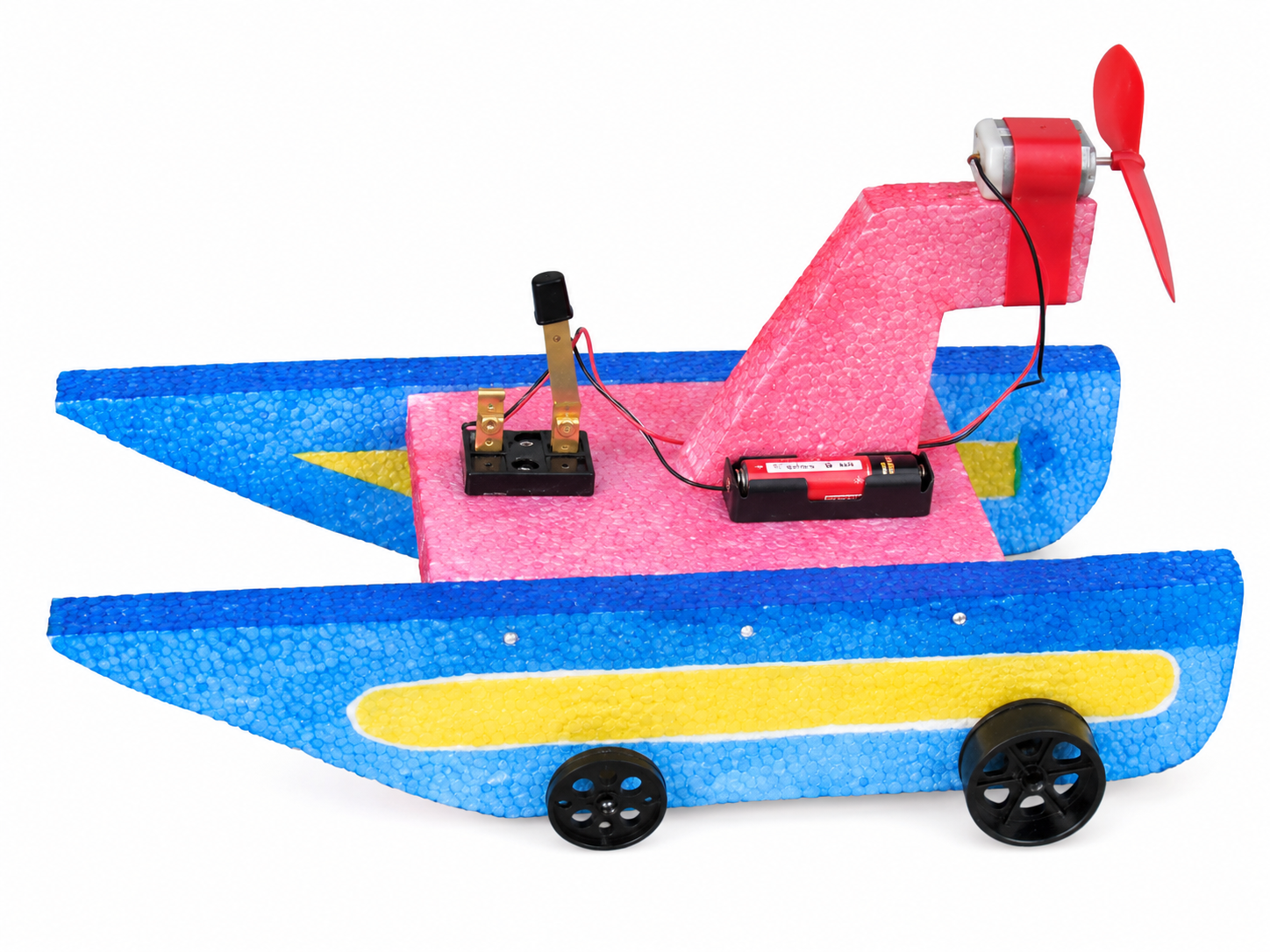
Cut the foam carefully with a utility knife. Apply white glue or wood glue to connect the foam parts, then paint the boat with latex paint or other water-based paint.
The battery is heavy and should be centered. Add other small weights if needed to improve stability on water.
If your kit includes wheels, install them on axle rods and make sure they spin freely. If not, wheels from a plastic toy car can work as an alternative.
Start by cutting the foam. You can cut the Styrofoam easily with a utility knife. Practice for a few minutes and you will get the grip on it. Hold the knife at a sharp angle and do not push too hard. You may need to go over the same line a few times until you get a clean cut.
Styrofoam boards can be glued using white glue or wood glue, and they can be painted with any latex or water-based paint.
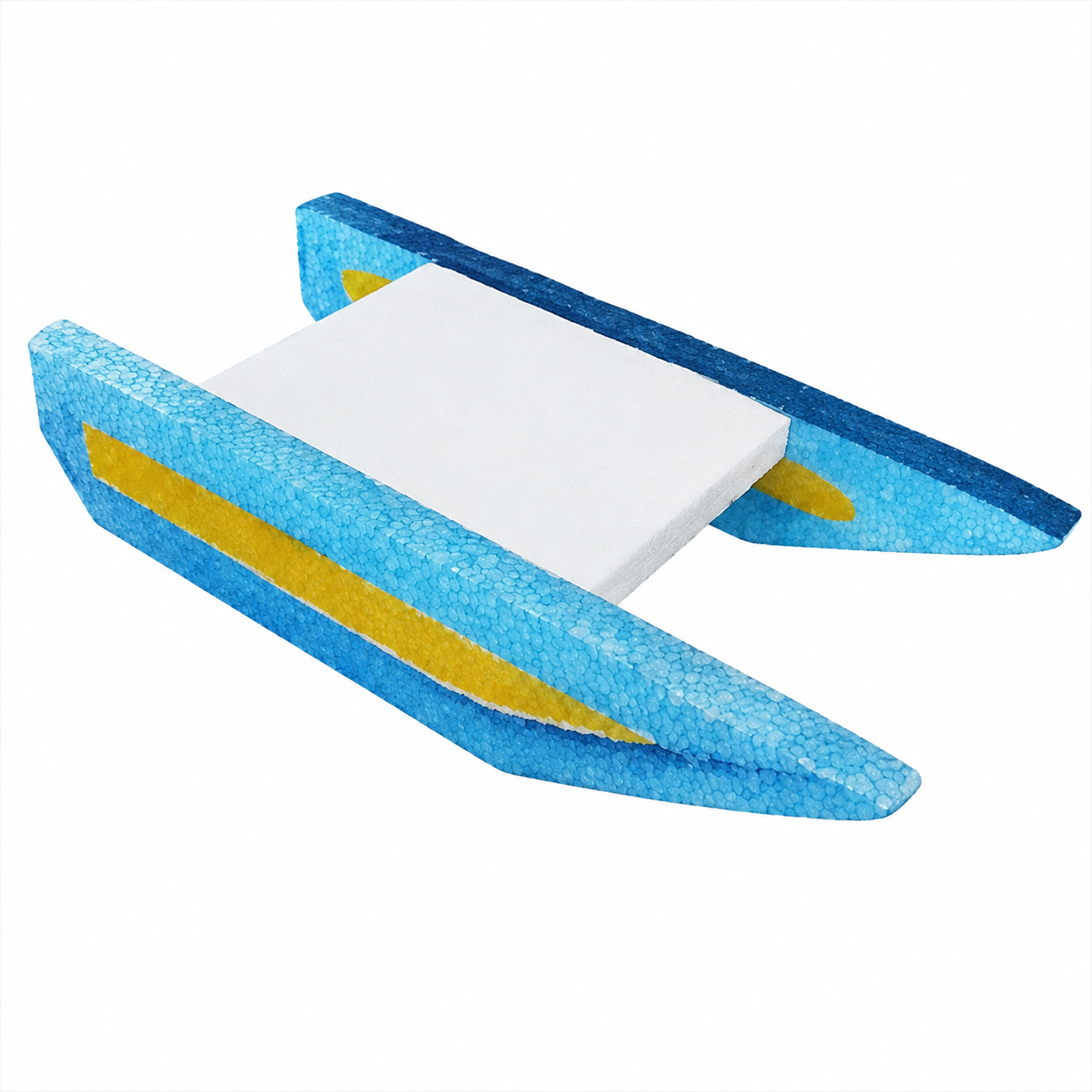
This method is not restricted to a boat. You can also make a car that drives by pushing the air backward. You just need four wheels and four nails, and the wheels must be large enough to spin freely.
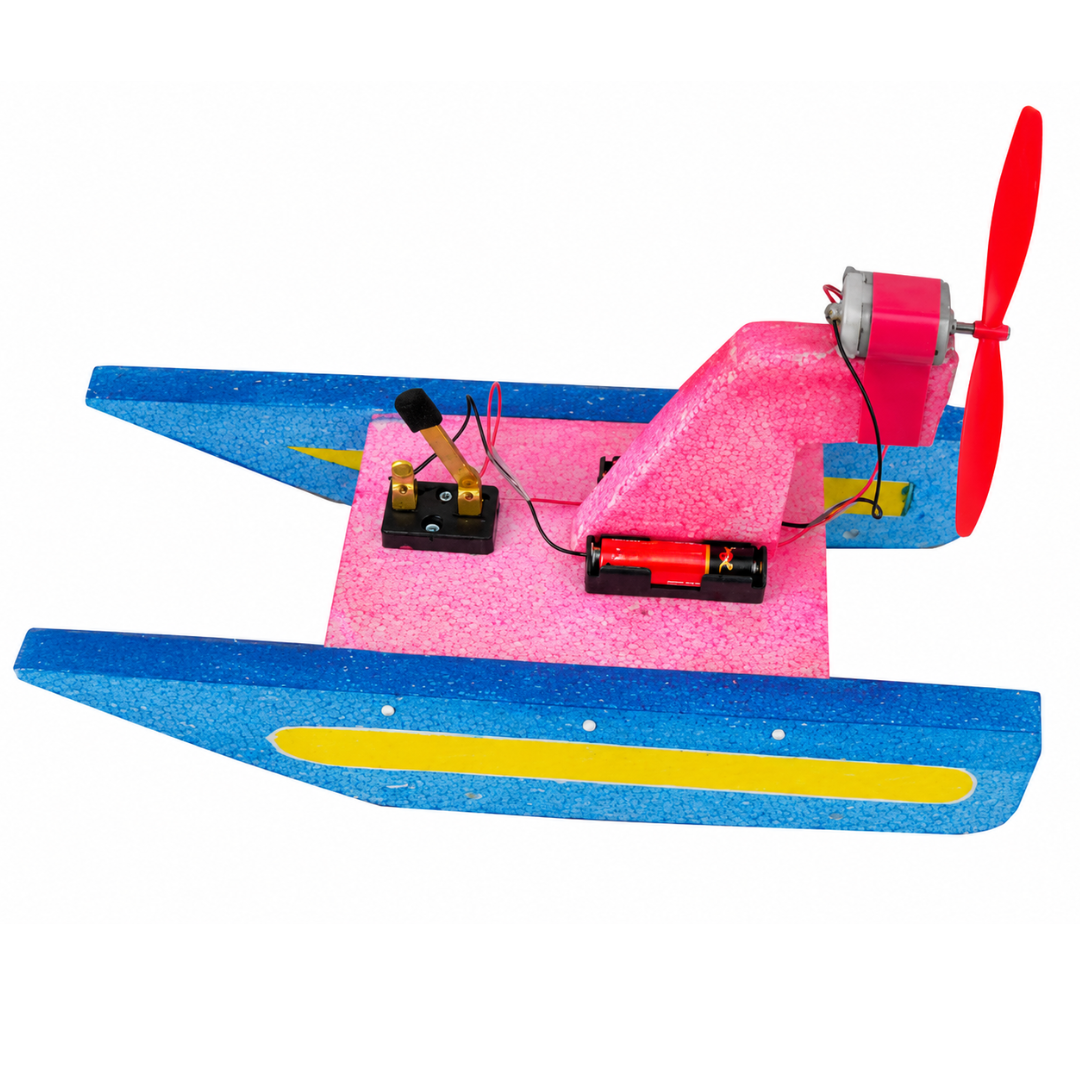
To hide the battery and switch, use some cardboard to build a small cabin and place it over those parts. The boat shown in the picture has no steering mechanism, so you can experiment with different ways to add steering to your design.
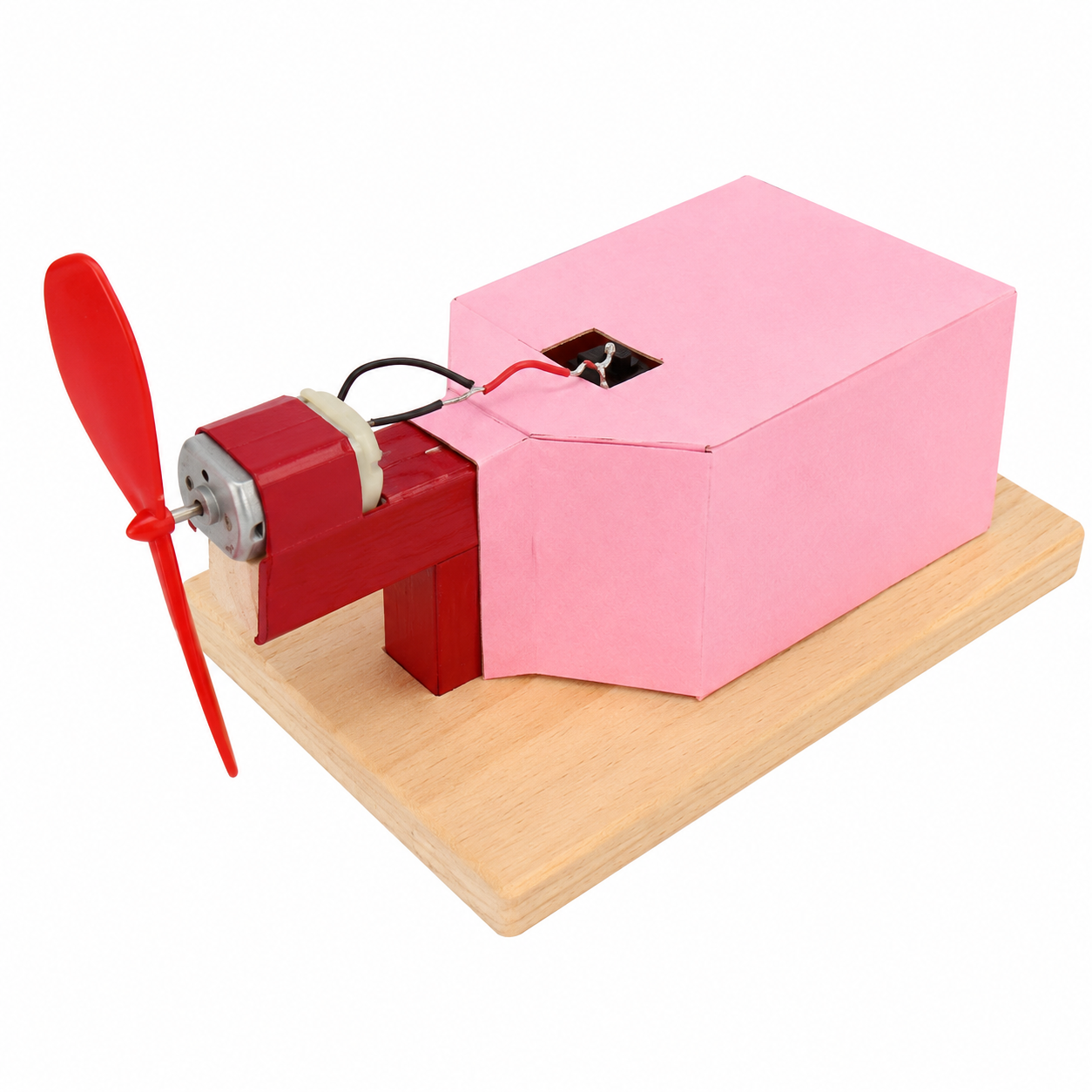
Two examples of a simple air propelled electric car. With some creativity and artwork, you can turn this into a much better project.


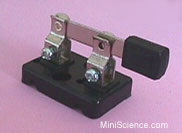

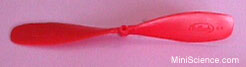
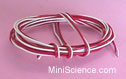
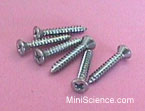

Screws are used to hold the switch, light base, or battery holders in place. You may receive one battery holder for 2 AA batteries, or two battery holders, each for one AA battery.
Other materials included in the kit are the Design Grid, the axle dowels, plastic straws, and wheels. Wheels are added as a bonus to some kits purchased at the beginning of the school year, and the kit materials can be reused in many other projects as well.
If you did not get wheels in your kit, use wheels from any plastic toy car instead. With creativity and artwork, you can turn this into a much better project.
Simple Electric Circuit Part#KITCB

Simple Electric Circuit and a Hybrid Car Boat
Product URL:
https://shop.miniscience.com/kitcb
MiniScience.com
1059 Main Avenue
Clifton, New Jersey 07011
Tel: (973) 777-3113
Email: info@MiniScience.com